By James D. “Keeper James” Charlet © 2026
Some excerpts from my Volume I: Shipwrecks of the Outer Banks: Dramatic Rescues and Fantastic Wrecks in the Graveyard of the Atlantic, Globe Pequot Publishing Group, 2020 by James D. Charlet and Volume II: Shipwreck Rescues of the Outer Banks: Sensational Wrecks and Heroic Rescues by the United States Life-Saving Service, Globe Pequot Publishing Group, 2025 plus new text.
Was the United States Coast Guard born in North Carolina? Certainly not. However, an argument can be made that the template and format for today’s U.S. Coast Guard was born from incidents occurring here. Both incidents are very well known; both have anniversaries coming soon.
Since both incidents are so well-known, they will only be briefly mentioned here. To begin the summary of trying to save shipwreck victims in America, we start with the lighthouses which certainly helped but shipwrecks still happened and the victims needed rescue.
Next were the volunteer organizations, especially the Massachusetts Humane Society, but still not national. The 1848 Newell bill was an admirable and noble effort but thwarted by widespread and blatant cronyism. Shipwrecks, loss of property and most importantly, loss of lives continued over the next two decades.
Shipwrecks, deaths and destruction continued unabated. The tragic situation came to a head on the North Carolina coast in late 1877 and early 1878.
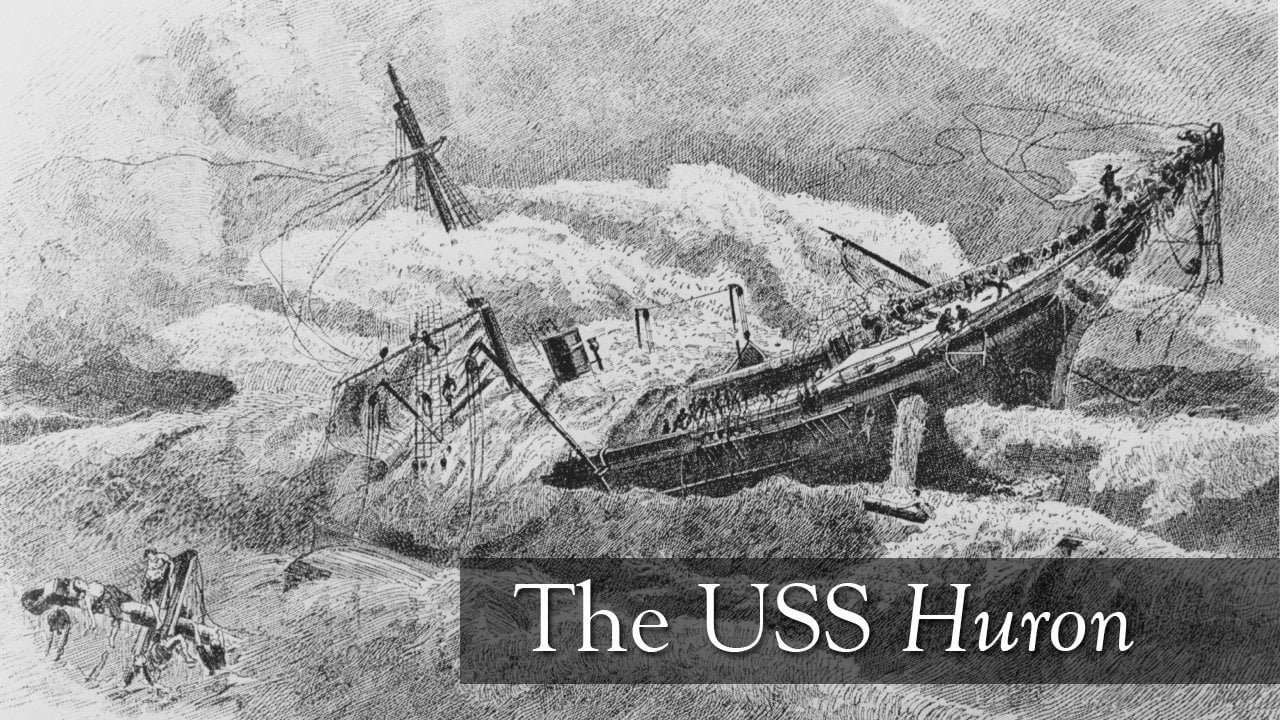
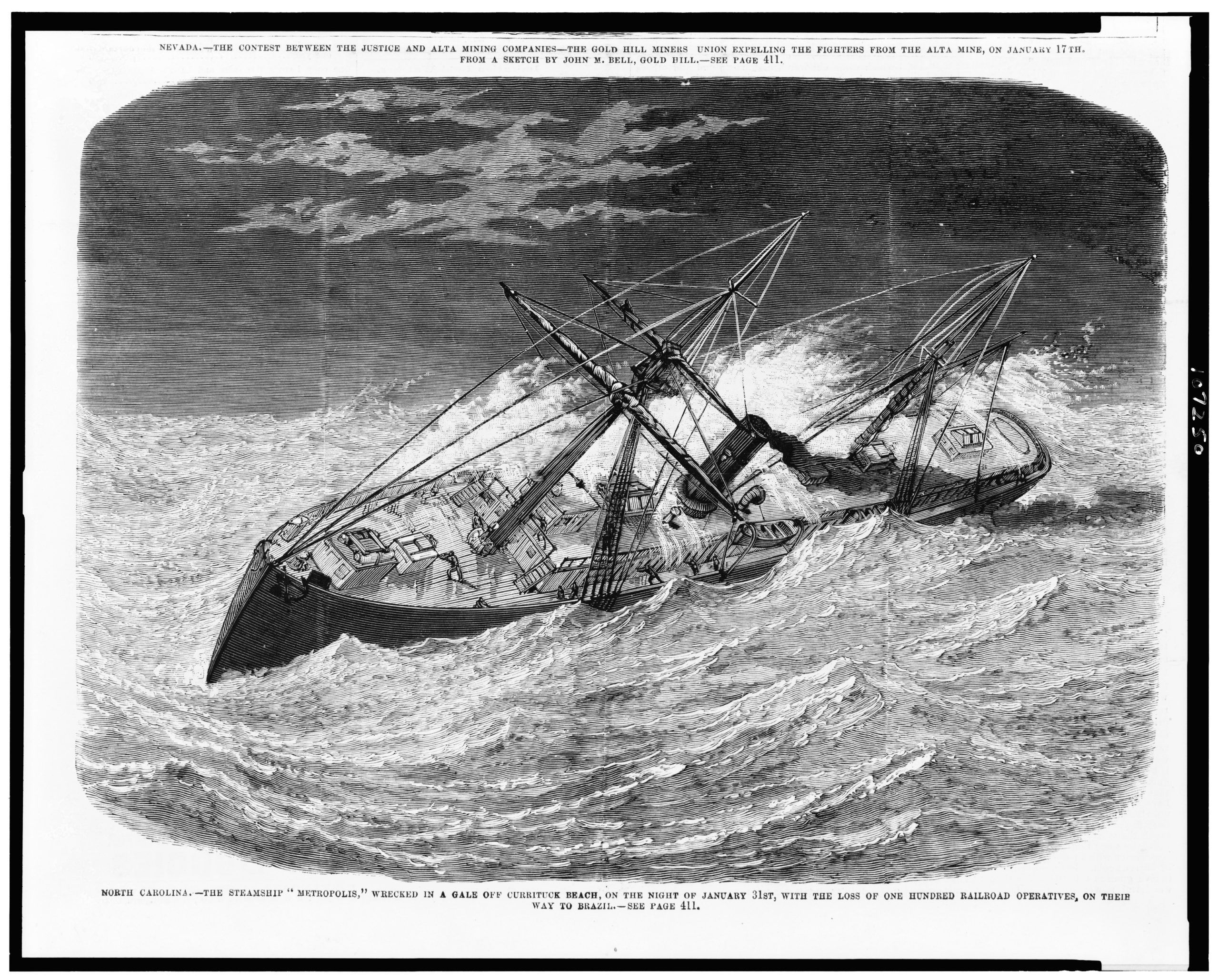
On November 24, 1877, the U.S. Army steamer Huron wrecked off Nags Head in a violent storm. While only yards from the beach, yet 103 lives were lost to drowning. The Nags Head Life-Saving Station two miles away was closed for the season. As we will see, then only 20 miles farther north and only two months later, the steamer Metropolis wrecked off the Currituck Beach in another tempest. The rescue was bungled by the crew from Currituck Beach Station Number Four due to inexperience and lack of preparation. Another 85 lives were lost as crowds on the beach watched the shipwreck victims drowning.
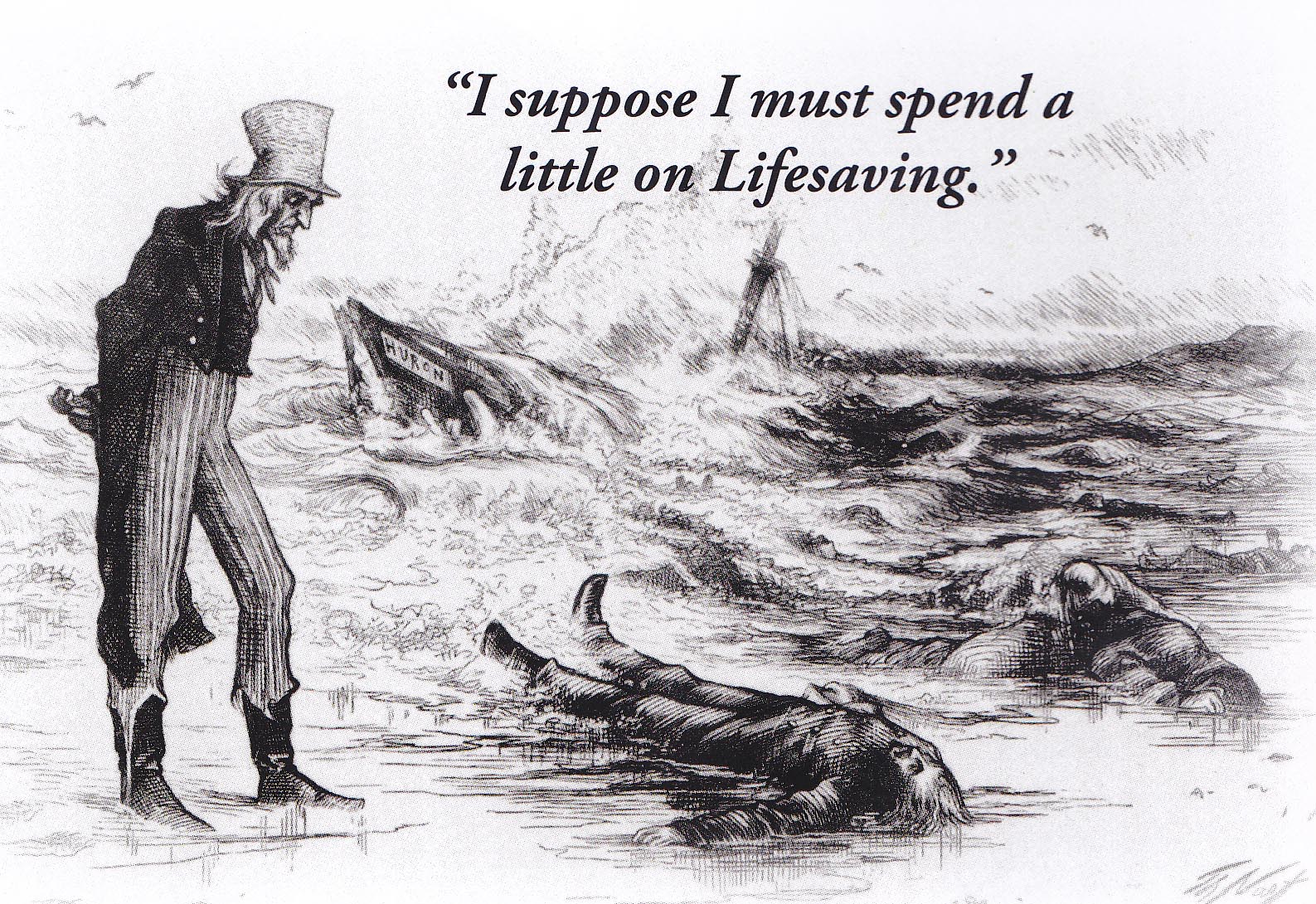
Of the Huron’s crew of 132, only 34 survived. Now the total death toll reached 103. Bodies washed ashore for the next two weeks, some as far away as 30 miles. There was a huge public outcry nationwide. Thomas Nast’s political cartoon certainly captured the critical essence of the situation.
The wreck of the Metropolis, forever tied with the name of the Huron, turned out to be the single most important shipwreck in the history of the United States Life-Saving Service (U.S.L.S.S.) as well as in the history of American maritime safety and security. How could that be, one might ask? Read on.
Headlines of the Metropolis disaster exploded in newspapers all over America. The articles were filled with anger. The news outraged our entire nation. Demands for immediate improvements had the politicians retreating.
Eighty-five lives lost. Another black-eye for the Service. But it got even worse – Editor Sharpe of The State magazine in a 1951 article says, “In all the hundreds of thousands of words written about the Metropolis, then and since, no single person involved in the tragedy escaped ugly charges or bemoaning insinuations.” His headline was the whole point of the story. It reads, “THE CATASTROPHE THAT SHOOK AMERICA AND LED TO ESTABLISHMENT OF ALL-YEAR BEACH CONTROL BY OUR COAST GUARD.” That in turn, led to a new Service and a new Superintendent.
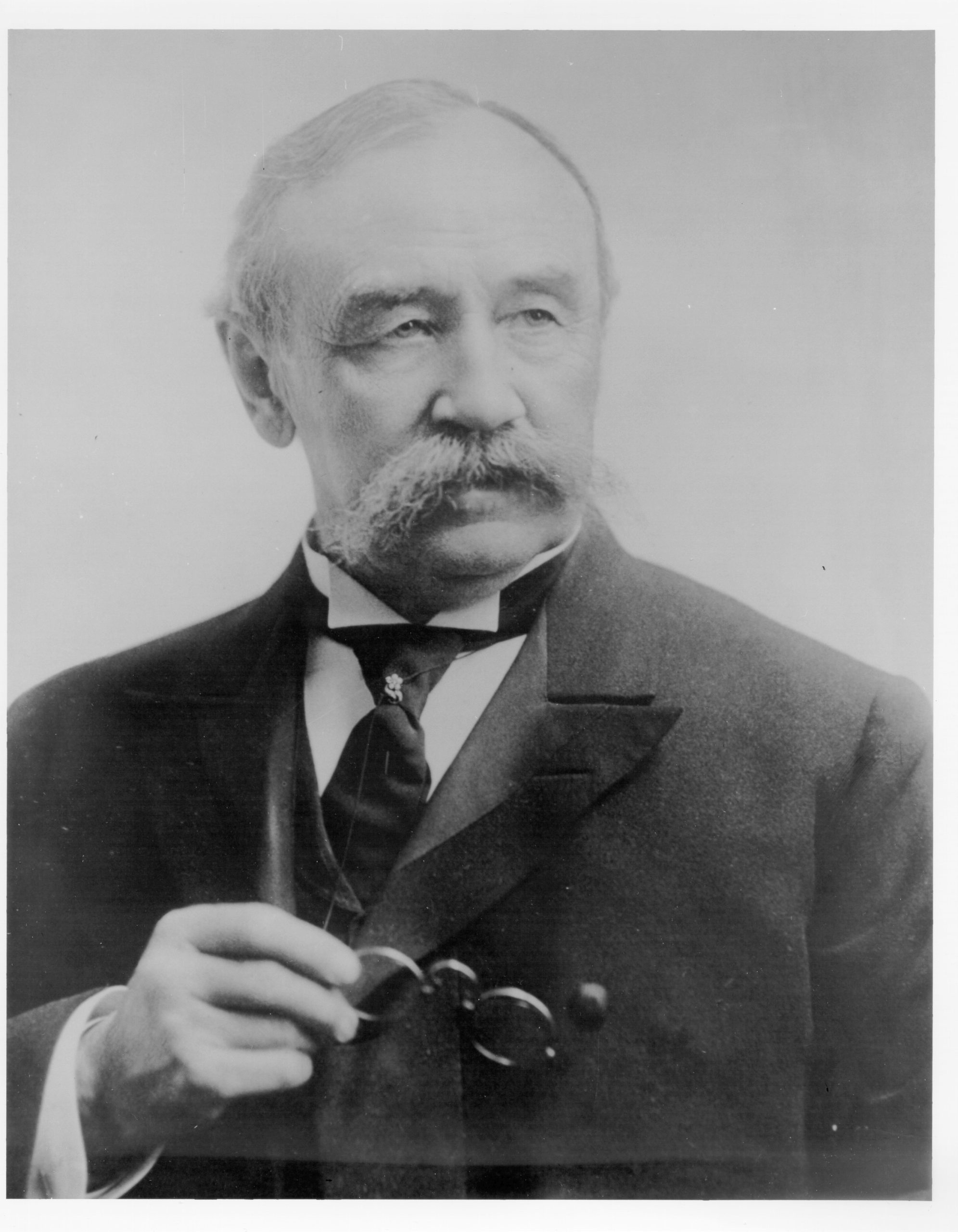
When it comes to extraordinary human beings, one simply needs to begin with that statement: Sumner Increase Kimball was an extraordinary human being. He knew the federal government; he knew bureaucracy and he also knew efficiency, incentives, discipline and he knew people. Most importantly, Sumner I. Kimball knew the economic importance of saving property and the sacred importance of saving human lives.
Consequently, he was the one asked to be that Superintendent. Well aware of the poor reputation, Kimball was extremely guarded in his response. “Mr. Secretary,” his own words firmly stated, “I shall accept your offer upon one condition. If you will stand by me, after I have convinced you that I am right, I shall attempt to bring about the reforms you desire. But I want to warn you that the pressure will be tremendous. Congressmen will come to you in long processions and will attempt to convince you that I am wrong and that the service is being ruined. It will require an uncommon display of backbone on your part, but if you will stand firm and refer all complaints to me, I promise you that I shall put the service where you want it and where it ought to be.” So it would be.
Superintendent Kimball made sweeping and positive changes. He literally wrote the book. ONLY experienced local watermen living near the station could be hired…and that for only one year at a time, but that was renewable. A highly detailed manual was written – which the men called “the Blue Book” – and it regulated everything down to the last detail. Duties and drills were described. Every station in the country did the same routine every day of the week: On Monday they practiced the Beach Apparatus Drill; Tuesday the Surfboat Drill; Wednesday the Flag Signaling practice; Thursday was a repeat of the Beach Apparatus Drill, showing its importance; Friday they learned and practiced First Aid; Saturdays were used for station, equipment and crew maintenance. Sunday was a day off – but – they were on call. By 1878, in addition to these daily drills, every Surfman had two vital duties: (1) keeping the Watch, and (2) Beach Patrol.
The increase in the rate of savings of life and property increased dramatically and suddenly. The United States Life-Saving Service was quickly becoming heralded as America’s sweethearts and heroes.
Those details, their strictness, efficiency and the template provided remains as the outline for operations of our United States Coast Guard today. And the embryo of that template came from the Outer Banks coast of North Carolina in two months of 1877 and 1878.
In 1894, Superintendent Kimball summarized “the book” he had designed from the beginning. It is a very interesting, very detailed account. Here is a review of its contents:
Organization and Methods of the United States Life-Saving Service, Sumner Increase Kimball,
Treasury Department, Life-Saving Service, Office of the General Superintendent, Washington, D. C., January5, 1894.
39 Pages, including Appendix A
No chapters, no Sections, all one flowing narrative.
Beginning Heading, all originally in caps: Methods and Organizations of the United States Life-Saving Service.
Pages 5 – 8: Locations of stations, starting with Maine, includes Atlantic coast, Gulf coast, Pacific coast and Great Lakes.
Page 8 – 10: Narrative continues describing stations’ environment, construction, layout, equipment, phone connections, design and ability for coastal stations to be relocated.
Page 11 – 14: Bureaucratic arrangement of Service: Personnel and Officers’ duties starting with General Superintendent, Assistant Inspector, district superintendent, station keeper (age, qualifications, hiring crew, living at station, training of crew, daily required reports.)
Page 15 – 16: Station characteristics. Active season is determined, number of crew varies, crew selected from residents of the area, avoiding politics and nepotism.
Page 16, second paragraph – 20: Surfmen. Age, physical condition, duties specified, contracts signed, pay ($50 per month during active season), what is allowed and not allowed, starting the active season at stations, rank of surfmen with No. 1 being highest, day watch and beach patrol assignments, patrolman’s equipment, beach apparatus drill described, surfboat practice, flag signaling practice, resuscitation drills.
Page 20, second paragraph through bottom of page 20:
Examples of various types of rescues: different weather, different boats, different times of day,
Page 20 – 31: Descriptions of the different surfboats: surfboat details, brand, size, variety of woods used, number of oars, costs, handling characteristics, efficiency. As of 1894, “During the 18 years they have been in the hands of our crews they have been launched 6,730 times in actual service and have landed 6,735 persons from wrecked vessels.” Numerous examples of use of the boat follows all through page 24 illustrating the number one means of rescue: the Lyle gun and the beach apparatus drill details, breeches buoy and life car, typical problems encountered while using the apparatus, telephone lines.
Page 32 – 35: Detailed statistics from the annual reports for 1888 and 1889, fiscal responsibilities of service, example from 1888 – number of disasters 528; value of property involved $6,416, 775; number of persons involved 2,428; number of persons lost 42; great number of examples follow.
Page 36, Conclusion: From Sumner I. Kimball, “I have endeavored to present a sketch of the organization and methods of the Life-Saving Service of this country and to convey an accurate idea of its effectiveness.”